vlCVX explained: vote locking, epochs and vote incentives
Written by Convex Guide Editorial Team
· Fact-checked · 9 min read

How vlCVX works: locking CVX for 16 weeks, weekly epochs, voting on Curve gauges, earning fees and Votium incentives, delegation, relocking and the kick mechanism.
What is vlCVX?
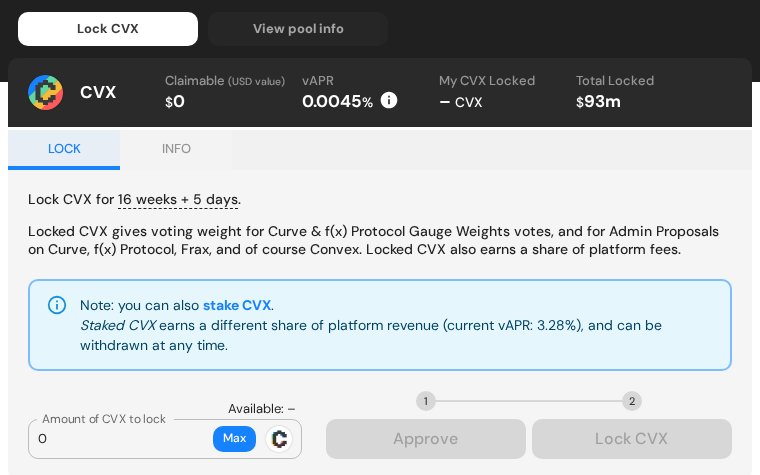
vlCVX stands for vote-locked CVX. To vote on any proposal on Convex you must lock your CVX for a minimum of 16 weeks. Locked CVX is non-transferable and represents your share of Convex governance power.
How epochs work
Convex counts time in weekly epochs. The official docs explain that locked tokens become accessible only after 16 full epochs have passed. If you lock just before a new epoch starts, your lock lasts about 16 weeks; if you lock mid-epoch, it lasts 16 weeks plus the time until the next epoch begins.
Your voting power also starts at the next epoch, so locking just before a vote does not always count — check timing before a gauge round.
What vlCVX votes on
vlCVX holders vote on two kinds of decisions. First, Convex governance proposals that change the protocol itself. Second — and most importantly — Curve gauge weight votes: vlCVX decides how Convex's veCRV balance is split across Curve pools, which determines where CRV emissions flow each week.
How lockers earn
- Platform fees: CVX stakers receive 4.5% of all CRV earned by Convex LPs, paid as cvxCRV.
- Fees from other Convex platforms, such as Frax, distributed to vlCVX.
- Vote incentives paid by protocols through markets such as Votium.
Votium and delegation
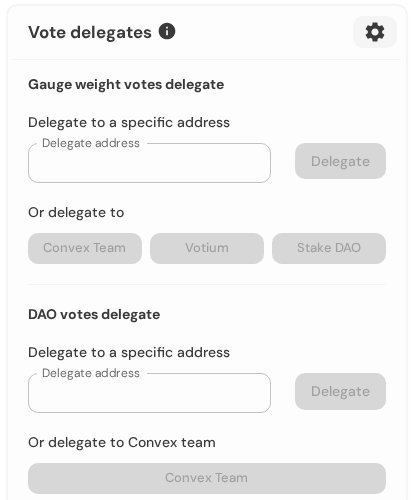
Votium is a marketplace where protocols deposit incentives for vlCVX holders who vote for particular gauges. According to the Votium documentation, gauge weight votes run bi-weekly, starting Thursday 00:00 UTC and ending Tuesday 00:00 UTC. To be eligible, you must lock before the proposal starts, and if you want Votium to vote for you, you must delegate before then as well.
When the lock expires
When your 16 epochs end, you can withdraw your CVX or relock it to keep earning. If you do neither, your expired lock stops earning, and after a grace period anyone can "kick" it — withdrawing it for you in exchange for a small reward taken from the expired amount. Relocking on time avoids that cost.
Risks
- Illiquidity: you cannot sell vlCVX during the lock.
- Incentive income varies with demand for Curve votes.
- Governance outcomes may not match your preferences.
Key takeaways
- Lock CVX ≥16 weeks to get vlCVX.
- vlCVX steers Convex's veCRV votes on Curve gauges.
- Income = platform fees + vote incentives; relock to avoid kicks.
Related guides
11 min read
The Curve Wars explained: why protocols fight for CRV votes
What are the Curve Wars? How gauge votes direct CRV emissions, why Convex became the kingmaker, how vote incentives work and what it means for users.
Read guide →
7 min read
How to deposit on Convex: stake Curve LP tokens and lock CVX
Step-by-step tutorial with real screenshots: staking Curve LP tokens on Convex, converting CRV to cvxCRV, locking CVX and delegating votes.
Read guide →